

Match odds is a structure used to interpret a cricket game through three possible outcomes: one side wins, the other wins, or the game ends without a winner. Each odds figure reflects how likely that result is considered at that moment in odds terms. A common question is what is match odds in cricket betting and how it connects to this format. This article focuses only on how the setup works and how numbers behave, helping readers clearly separate it from other formats. Within cricket, understanding figures inside a cricket market should always begin from the final direction of the game, not from scoring totals or adjusted conditions.
Match odds how the three-way setup works in cricket
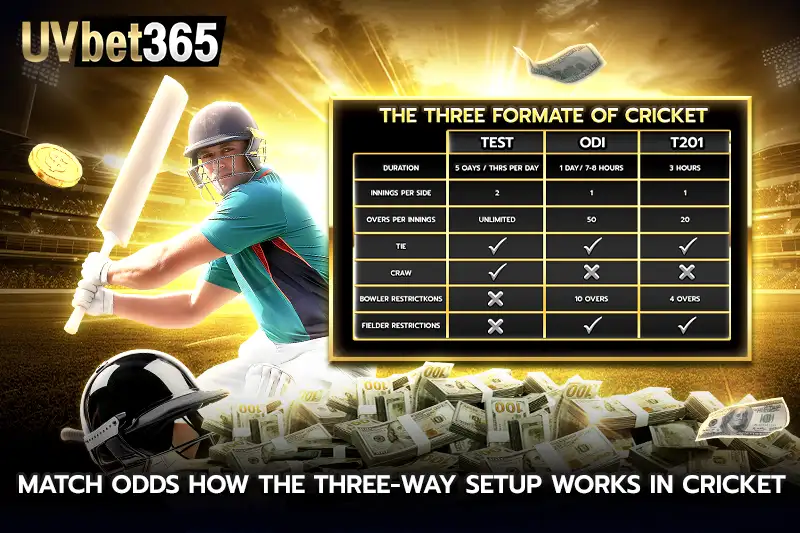
This structure divides a game into three main possibilities and is widely used across the cricket market: one side wins, the other side wins, or no winner is recorded. It does not measure margin or totals but focuses directly on how the game ends.
In cricket betting, this arrangement simplifies interpretation. Each option represents a specific match outcome, meaning every number is tied to a final direction rather than a scoring condition. Selecting one option means backing that side to win; selecting the other means the opposite; while the draw represents no winner under the rules of that setup.
Another key idea is that all three options are mutually exclusive. When one happens, the other two are automatically removed. For example, if one outcome, the alternative and the draw no longer apply.
This perspective helps readers avoid interpreting figures in isolation because all three sides are connected to the actual match outcome. Instead, they should be viewed as one connected set, which is the core of reading this type of market, since each figure is not assigned randomly but always relates to the others within the same structure.
what each side represents
Each option has a clear role: one reflects a win for one side, another reflects a win for the opponent, and the last represents no winner. The correct approach is to first identify which direction each number represents rather than focusing on which one looks appealing. Misreading this link leads to incorrect interpretation of the entire setup.
It is important to understand that these numbers do not measure team strength directly but show how weight is distributed across possible directions within the same framework.
How price levels reflect likelihood in this format
In this format, odds act as signals of perceived likelihood. This can be observed through the price level assigned to each side. A lower figure usually indicates a higher perceived chance, while a higher one suggests a less likely direction in that situation.
This does not require formulas or percentage conversion. The key is recognizing directional signals, which is the basis of how to read odds in cricket. For example, if one side shows a lower figure, it indicates stronger confidence toward that direction, but it does not guarantee the final result.
Detailed numerical interpretation of cricket betting odds should be handled separately, as this article focuses only on structural reading.
Comparing figures across sides also makes the picture clearer. For example, when both teams are close, it means the market sees their chances as not very different, or that the price level on both sides is not meaningfully far apart. But if one side is clearly lower, it reflects a difference in market view at that moment.
Observing the gap between numbers is also useful. It is not only about which side is lower or higher, but how far apart they are. This helps form a clearer picture without relying on calculations.
In practical use, understanding these levels allows readers to quickly identify which direction is currently favored without needing to analyze all available data.
How this differs from handicap and totals

This format differs from handicap and totals, which are other types within the cricket market that answer different questions. An outcome format asks, “Which final result will happen?” while handicap uses adjusted scoring conditions, and totals ask whether the combined score will go over or under the set line.
When viewing this format, readers should focus on win, loss, or draw. In contrast, handicap shifts attention to results after conditions are applied, while totals do not focus on who wins but on the combined runs or score.
simple framework to separate them
Use this quick distinction:
- Outcome format: read win–loss–draw
- Handicap: read adjusted result
- Totals: read combined scoring as over under
If the question is “who wins,” focus on this format. If the question involves adjustments or totals, it belongs to a different category.
Another useful approach is to identify what the format is asking. If it asks about the final direction, it belongs here. If it adds conditions, it belongs elsewhere. This reduces confusion without needing to memorize details.
how to identify favorites and underdogs from price signals
Reading favorites and underdogs in this format starts by comparing each odds figure and linking it to the current match outcome that the market is weighing. A lower number is usually associated with a higher perceived chance, while a higher number reflects a less likely direction in that situation.
However, it is important to separate “market perception” from the actual result. These odds figures act only as signals of evaluation, not confirmation. This is especially relevant in cricket, where conditions can shift quickly due to events such as wickets or scoring momentum.
Another important aspect is how figures change during play. Movement in price level can reflect what is happening at that moment. For example, if one side’s level drops, it may indicate that its likelihood is being adjusted upward based on in-game developments.
Interpreting these changes should remain within the same framework: understanding how the likelihood is shifting, rather than jumping to conclusions about the final result. The system reflects updated views, not certainty.
- If both sides have similar price levels, it suggests that the chances are relatively balanced, with no clear direction favored.
- If one option is clearly lower, it indicates that more weight is being placed on that match outcome, which can be interpreted as the favorite within this format.
- If the price level moves steadily during play, such as one side continuing to drop, it shows that confidence is increasing in response to game events.
- If figures fluctuate without a clear direction, it suggests uncertainty, with no strong weighting toward any single match outcome.
reading signals without confusing them with prediction
A safe approach is to treat numbers as the “language of the board.” A lower figure means higher perceived likelihood at that moment, while a higher one suggests a less likely direction. All of this still operates within the same three-way setup.
These signals should be used to compare weight between directions, not to confirm final results. The clearest rule is: use numbers to compare, not to predict.
summary how to read match odds correctly
match odds should always be read starting from its three-way setup: one team wins, the other wins, or no winner occurs. After that, interpret how each number reflects the likelihood of each direction.This format differs from handicap, which focuses on adjusted scoring, and totals, which focus on combined scoring. Once this structure is clear, readers can separate formats correctly and understand favorites and underdogs within the context of Match results.